A heart attack (myocardial infarction) happens when blood flow to the heart muscle is blocked. Recognizing the early warning signs can save a life—yours or someone else’s.
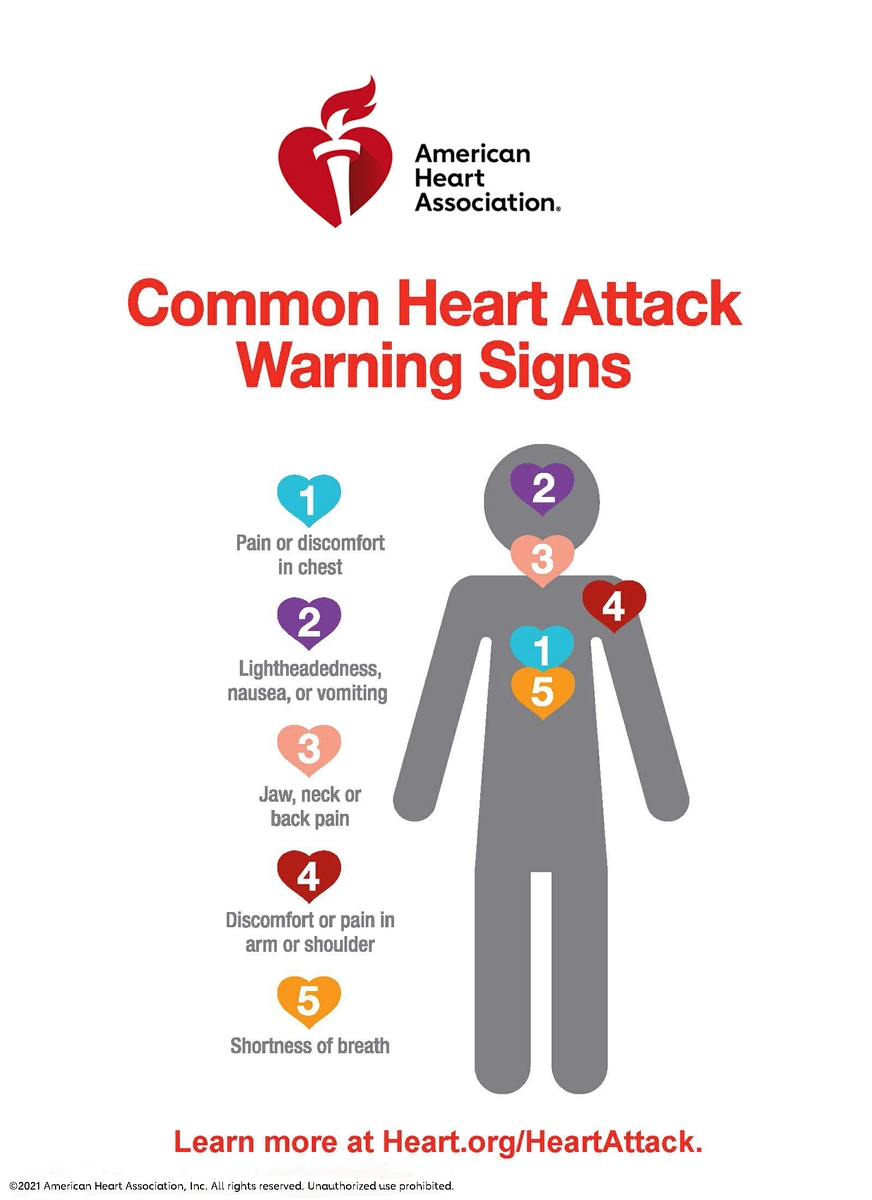
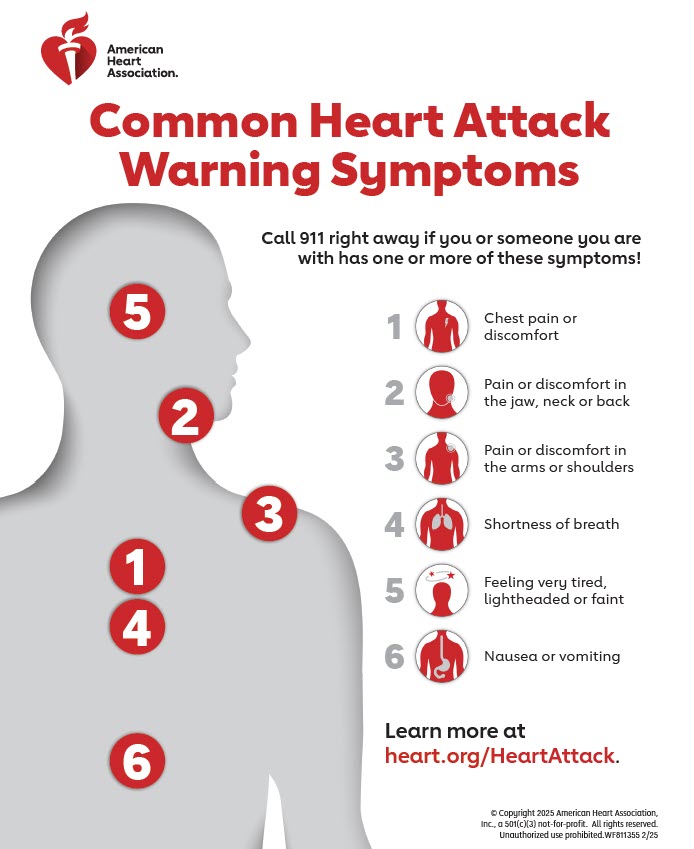
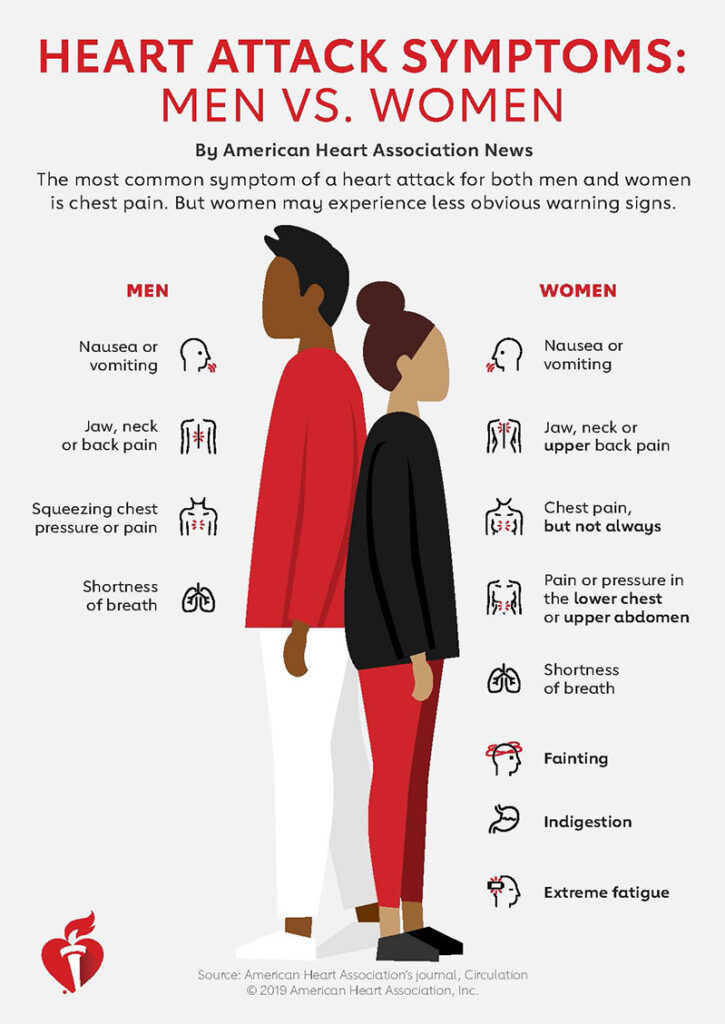
1️⃣ Chest Pain or Discomfort (Most Common Sign)

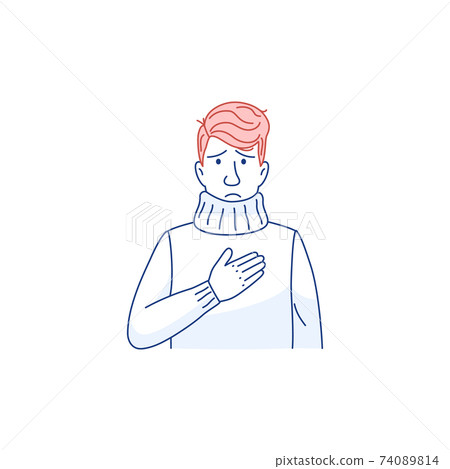
What it feels like:
-
Pressure, tightness, squeezing, or burning in the center or left side of the chest
-
Pain may last more than a few minutes or come and go
Important:
Some people mistake this for gas or indigestion, but heart attack pain often feels heavy and crushing, not sharp.
2️⃣ Pain Spreading to Arm, Neck, Jaw, or Back
Common areas affected:
-
Left arm (most common)
-
Both arms
-
Neck or jaw
-
Upper back or shoulders
This pain may start in the chest and travel outward, or appear suddenly without chest pain.
3️⃣ Shortness of Breath
You may notice:
-
Difficulty breathing while resting
-
Feeling like you can’t get enough air
-
Breathlessness with or without chest pain
This is especially common in women and older adults.
4️⃣ Cold Sweat, Dizziness, or Sudden Weakness


Warning signs include:
-
Sudden cold sweating
-
Feeling faint or lightheaded
-
Sudden extreme fatigue
These symptoms may appear hours before a major heart attack.
5️⃣ Nausea, Vomiting, or Stomach Pain

Often mistaken for food poisoning or gastritis.
More common in:
-
Women
-
People with diabetes
-
Elderly patients
If stomach pain comes with sweating or shortness of breath, take it seriously.
6️⃣ Unusual Fatigue (Especially in Women)

Signs:
-
Extreme tiredness without reason
-
Fatigue lasting days or weeks
-
Feeling exhausted after mild activity
This can be an early silent warning before a heart attack.
🚨 What To Do Immediately (Life-Saving Steps)
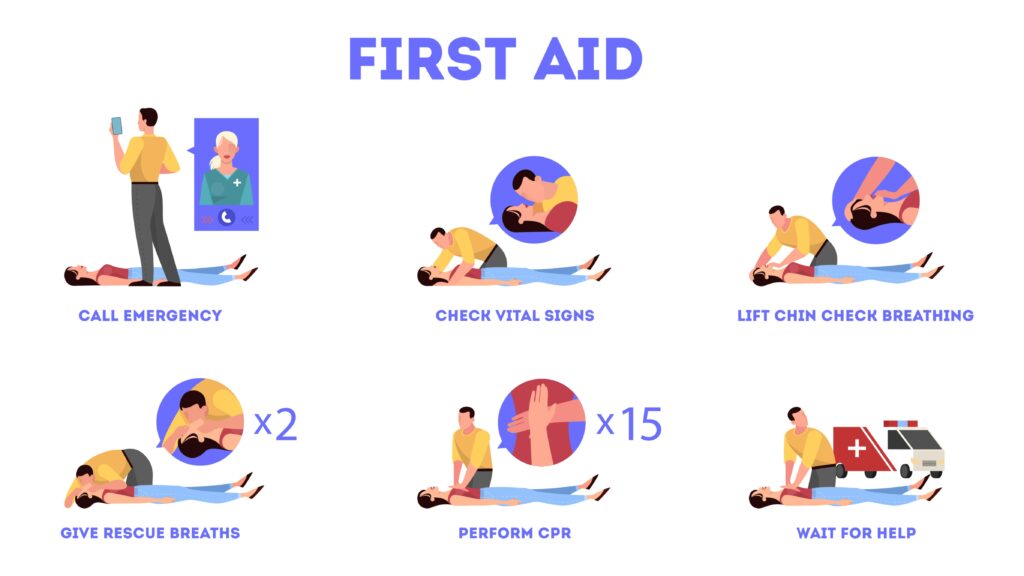
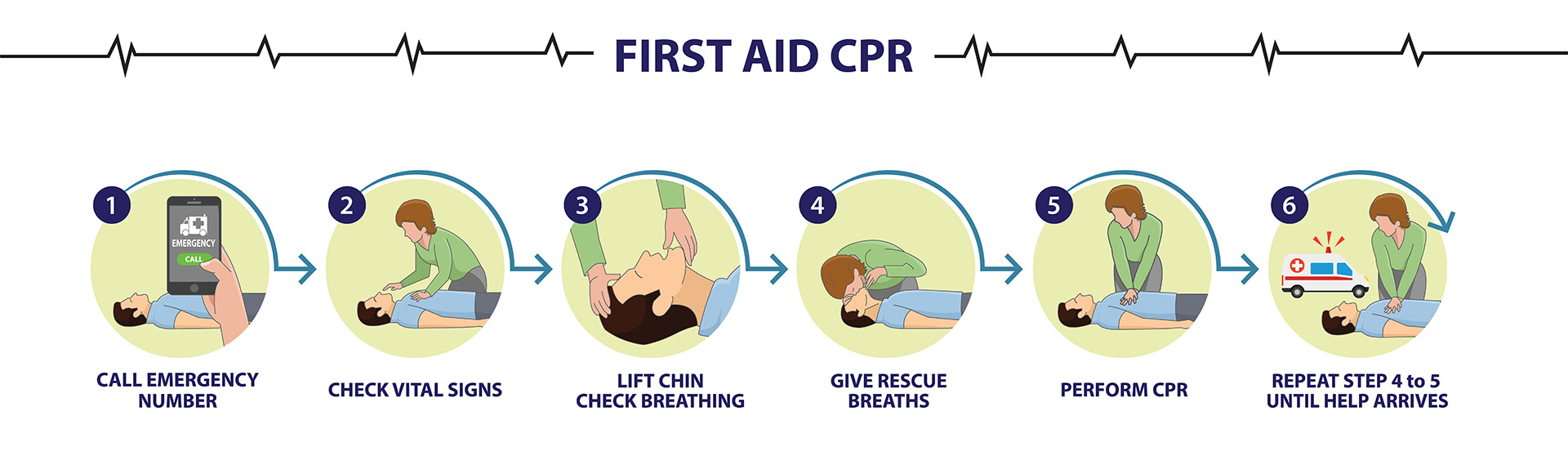
If you or someone nearby shows any combination of these symptoms:
-
Call emergency services immediately
-
Do NOT wait for symptoms to pass
-
Sit or lie down calmly
-
Loosen tight clothing
-
If prescribed, take nitroglycerin
-
If advised by emergency services, chew aspirin (unless allergic)
⏱️ Every minute matters. Delayed treatment increases heart damage.
👨⚕️ Expert Medical Advice
-
Heart attack symptoms vary by person
-
Women often experience atypical symptoms
-
Diabetics may have silent heart attacks
-
Never self-diagnose chest pain at home
Rule of thumb:
👉 If symptoms last more than 5 minutes, treat it as an emergency.
❤️ Who Is at Higher Risk?
-
Smoking
-
High blood pressure
-
High cholesterol
-
Diabetes
-
Obesity
-
Stress
-
Family history of heart disease
🔔 Final Reminder
Many heart attack deaths happen because people ignore early warning signs.
If something feels wrong — trust your body and seek help immediately.